
 AI ERP with agents inside the systems you run
 AI phone and voice agents for real calls
 LLM.coPrivate, self-hosted LLM deployments
 Legal AI infrastructure for firms
 AI RFP discovery and response drafting
 Automatic.coBusiness process automation
 CyberAttack.aiThreat detection and defense
 Secure AI virtual data rooms
 DigitalSign.coAI-designed digital signage for any screen
 cstm.aiCustom AI hardware, software, and engineers
How To Write A Thank You Email After A Software Engineering Job Interview
If you believe that thank-you letters and emails are a thing of the past, we’ve got news for you. These simple gestures of courtesy show that you are gracious and well-mannered, and they can go a long way toward building a strong reputation in the professional world.
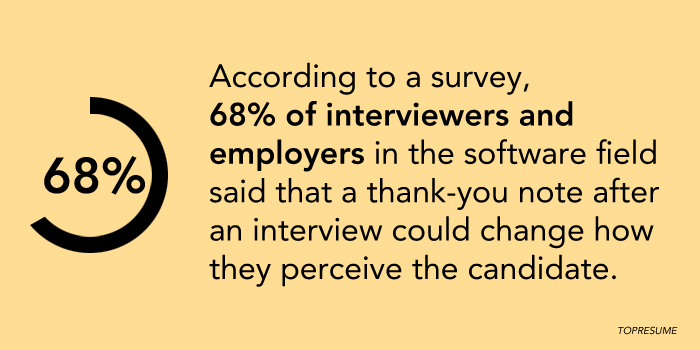
In a 2017 Talent Inc. survey, 68% of hiring managers and recruiters said that receiving a thank-you note after an interview affects how they view a candidate. Yet plenty of candidates still skip it, so a short, specific email is one of the easiest ways to stand out.
Many software and IT staffing firms rule out candidates simply because they don’t remember them. A thank-you email builds familiarity and helps interviewers recall you among a full slate of candidates, which can tip a close hiring decision.
The ideal time to send a thank-you email is within 24 hours of the interview, while the conversation is fresh for both of you. If an agency or recruiter handles your correspondence with the employer, send the note to them and ask them to pass it to the hiring manager.
Tips To Make Your Thank-You Email Stand Out
Address the interviewer by name, and keep the tone genuine. A few sincere sentences beat a page of formal flattery.
If several people interviewed you, send each of them a separate, slightly different email, as long as you have their contact details. If you don’t, ask the recruiter or your main contact to forward your thanks.
Reference a Specific Point of Conversation
Mention a particular moment from the interview: a technical problem you discussed, a project they described, or a skill they said the team needs to hire for. Then connect it to your experience in a sentence or two. This proves you were listening and makes your email impossible to mistake for a template.
Express Interest
Hiring managers want candidates who actually want the role. Say plainly that you’re excited about the position and why. A thank-you email lets you follow up without seeming pushy.
Clarify or Add Something You Missed
Technical interviews rarely go perfectly. If you blanked on a question or found a cleaner solution to a coding problem afterward, a brief note (“I kept thinking about the caching question; here’s how I’d approach it now”) can turn a weak moment into a strong one. Keep it to a few lines; this is not a second interview.
Ask About the Next Step in the Hiring Process
Close by asking about the timeline or next round, and offer anything that would help, such as references, a portfolio link, or a code sample.
What Should You Include in Your Thank-You Email?
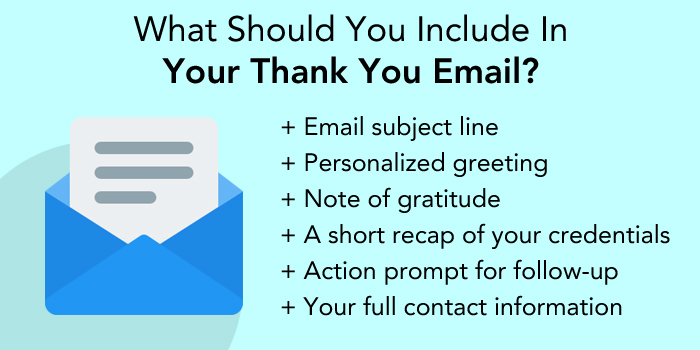
An effective thank-you email has a few standard parts:
- A clear subject line
- A personalized greeting
- A note of gratitude that names the role
- A specific detail from the conversation
- A one- or two-sentence recap of why you’re a fit
- A question about next steps
- Your contact information
For the subject line, keep it short and recognizable. “Thank you for today’s interview” or “Great speaking with you about the backend role” works fine.
Open with “Hi” or “Dear” followed by the name the interviewer used with you. Thank them for their time, and mention the job title, since hiring managers are often interviewing for several positions at once. For example: “I appreciate you taking the time to discuss the software engineering position with me today.”
Follow with a quick recap of your background. The hiring manager already has your resume, so this should be short and focused: link one or two of your strengths to what the team needs and why you’re a good fit for the job.
Finally, sign off with your full name, email address, and phone number, plus a link to your GitHub or portfolio if it’s relevant.
Subject Lines That Work
- Thank you for today’s interview
- Thanks for your time: [Job Title] interview
- Great speaking with you about the [Team] role
- Following up on our conversation
Sample Thank-You Emails
Here are some templates you can adapt. Replace the bracketed details, and always add at least one specific point from your own conversation.
Sample #1: After a First-Round Interview
Subject line: Thanks for interviewing me
Hello Dan,
Thank you for taking the time to meet with me today about the software engineering position. I enjoyed learning more about your development team and the platform migration you’re planning.
The role sounds like a great fit, particularly the chance to own services end to end. My experience leading a similar migration at [Company] would let me contribute quickly.
I’d welcome the chance to discuss next steps, and I’m happy to share references whenever useful.
Thank you,
[Your Name]
[Email] | [Phone] | [GitHub or portfolio]
Sample #2: After a Technical or Coding Interview
Subject line: Thanks for today’s technical interview
Hi Diana,
Thanks for walking through the system design exercise with me today. I enjoyed digging into the rate-limiting problem, and after we spoke I sketched out a version that uses a token bucket per client instead of a global counter. Happy to walk through it if that’s helpful.
The way your team pairs on design reviews is exactly the kind of environment I’m looking for, and I’d love to keep the conversation going.
Best,
[Your Name]
[Email] | [Phone]
Sample #3: After a Panel Interview (Send to Each Person)
Subject line: It was great meeting you
Hi Penny,
Thank you for being part of my interview panel today. I especially appreciated your perspective on how QA and engineering work together on releases; it’s clear the team takes quality seriously.
I’m excited about the role and confident my background in test automation would be useful to the team. Please don’t hesitate to reach out if you have any further questions.
Thanks again,
[Your Name]
[Email] | [Phone]
Sample #4: After a Final-Round or Leadership Interview
Subject line: Thank you for the interview
Dear Dr. Richards,
Thank you for meeting with me yesterday about the head of software development position. I enjoyed hearing your view of where the engineering organization is headed over the next year, especially the focus on delivery metrics.
The scope of the role matches my experience building and leading engineering teams, and I’m confident I could help you reach those goals. I look forward to hearing about next steps.
Sincerely,
[Your Name]
[Email] | [Phone]
Sample #5: Short Note to a Recruiter
Subject line: Thanks, and a quick follow-up
Hi Sam,
Thanks for setting up today’s interview with the platform team. It went well, and I’m even more interested in the role now. Please pass along my thanks to the team, and let me know if they need anything else from me.
Best,
[Your Name]
Mistakes to Avoid
- Sending the same email to every interviewer. They may compare notes.
- Writing too much. Three short paragraphs is plenty.
- Typos and the wrong name or title. Proofread before you hit send.
- Re-arguing the interview. Clarify one point if you need to, but don’t relitigate every answer.
- Waiting a week. Send it the same day or the next morning.
What If You Don’t Hear Back?
If the interviewer gave you a timeline, wait until it passes, then send one short, polite follow-up asking whether there’s an update. If no timeline was given, about a week is a reasonable wait. If there’s still no answer after a second follow-up, it’s usually best to keep your search moving.
Wrapping Up
Thank-you emails work after phone screens, technical interviews, panels, and final rounds alike. Keep them short, specific, and sent within a day, and personalize each one.
A well-crafted email that expresses your gratitude and interest can make the difference when a hiring manager is choosing between strong candidates.