 AI ERP with agents inside the systems you run
 AI phone and voice agents for real calls
 LLM.coPrivate, self-hosted LLM deployments
 Legal AI infrastructure for firms
 AI RFP discovery and response drafting
 Automatic.coBusiness process automation
 CyberAttack.aiThreat detection and defense
 Secure AI virtual data rooms
 DigitalSign.coAI-designed digital signage for any screen
 cstm.aiCustom AI hardware, software, and engineers
Offline-first
Default architecture
Not a fallback mode
ISOBUS
Equipment standard we build to
Plus John Deere, Case IH APIs
100%
Data and code yours at launch
No platform lock-in
390+
Projects shipped
Since 2013
The operational reality
Agriculture software runs where the infrastructure doesn't
Most software assumes a network connection is a given. In agriculture, it's the exception you have to design around, along with a buying cycle and a set of proprietary equipment ecosystems most software teams have never actually touched.
Rural connectivity is genuinely poor, not just spotty
Large parts of active farmland have no cellular coverage at all, and the coverage that exists is often too slow for anything beyond text. A field data-collection app that assumes a live connection stops working the moment it matters most — mid-field, mid-season — which is exactly when a grower has the least patience for a spinner.
Offline-first means the app works with zero network, period
Not a cached read-only view — full functionality, with local storage and a sync queue that reconciles when connectivity returns. That's an architecture decision made at the start of a project, and retrofitting it into an app built connection-first is close to a rebuild rather than a patch.
Equipment telematics run on standards most agencies have never touched
ISOBUS (ISO 11783) is the open standard for equipment-to-implement communication, but John Deere, Case IH, and Trimble each layer proprietary APIs and data formats on top of it for their own telematics platforms, and a real integration has to account for both.
The buying cycle follows the growing season, not a fiscal quarter
A farm operation's software budget and attention are available in the off-season — winter for row crops, the period between harvest and planting — and largely unavailable during planting and harvest, when every hour goes to the field. Build timelines that ignore this ship into a season nobody has time to adopt anything in.
Traceability and compliance are increasingly non-negotiable
Food safety traceability requirements (FSMA 204 in the US, and buyer-driven requirements from large retailers) are pushing farm-to-table tracking from a nice-to-have into a purchase requirement, particularly for produce operations selling into larger supply chains that audit their suppliers directly.
Data ownership is a live concern for growers
Farmers are increasingly wary of platforms that treat field-level yield and input data as the vendor's asset rather than the grower's. Software that's vague about who owns the data it collects is a harder sell than it would have been five years ago.
What we build
The systems that make up an agriculture software stack
From farm management platforms growers use daily to the telemetry pipelines running quietly underneath — each has its own connectivity and integration demands.
Farm management information systems (FMIS)
Field-level record keeping, input tracking, and planning tools — the software equivalent of the paper log many operations still keep, built to survive being used from a truck cab with no signal rather than a desk with WiFi. A good FMIS earns its keep at tax time and audit time as much as during the season itself.
IoT and sensor telemetry pipelines
Soil moisture, weather stations, and grain bin sensors generate a steady stream of low-bandwidth data that needs to survive intermittent connectivity — usually via LoRaWAN or cellular IoT modules that batch and retry rather than requiring a constant link. Choosing the wrong radio protocol for a given property's terrain is a common, expensive mistake to correct after installation.
Satellite and imagery data integration
NDVI and other vegetation-index imagery from providers like Planet or Sentinel Hub, processed into field-level insights a grower can act on rather than a raw imagery file nobody has time to interpret.
Equipment telematics and ISOBUS integration
Pulling machine data — location, fuel use, as-applied rates — off equipment via ISOBUS or a manufacturer's telematics API, and reconciling it against planned field operations to catch discrepancies before they become a yield mystery months later.
Traceability and compliance systems
Farm-to-buyer tracking built to satisfy FSMA 204 or a specific retailer's supply chain requirements, generating the paper trail a compliance audit or a recall investigation actually needs, in the format the auditor expects rather than one that requires translation.
Marketplace and supply chain tools
Platforms connecting growers directly to buyers, input suppliers, or equipment dealers — a different problem from field software, closer to standard marketplace and logistics engineering with agriculture-specific data on top.
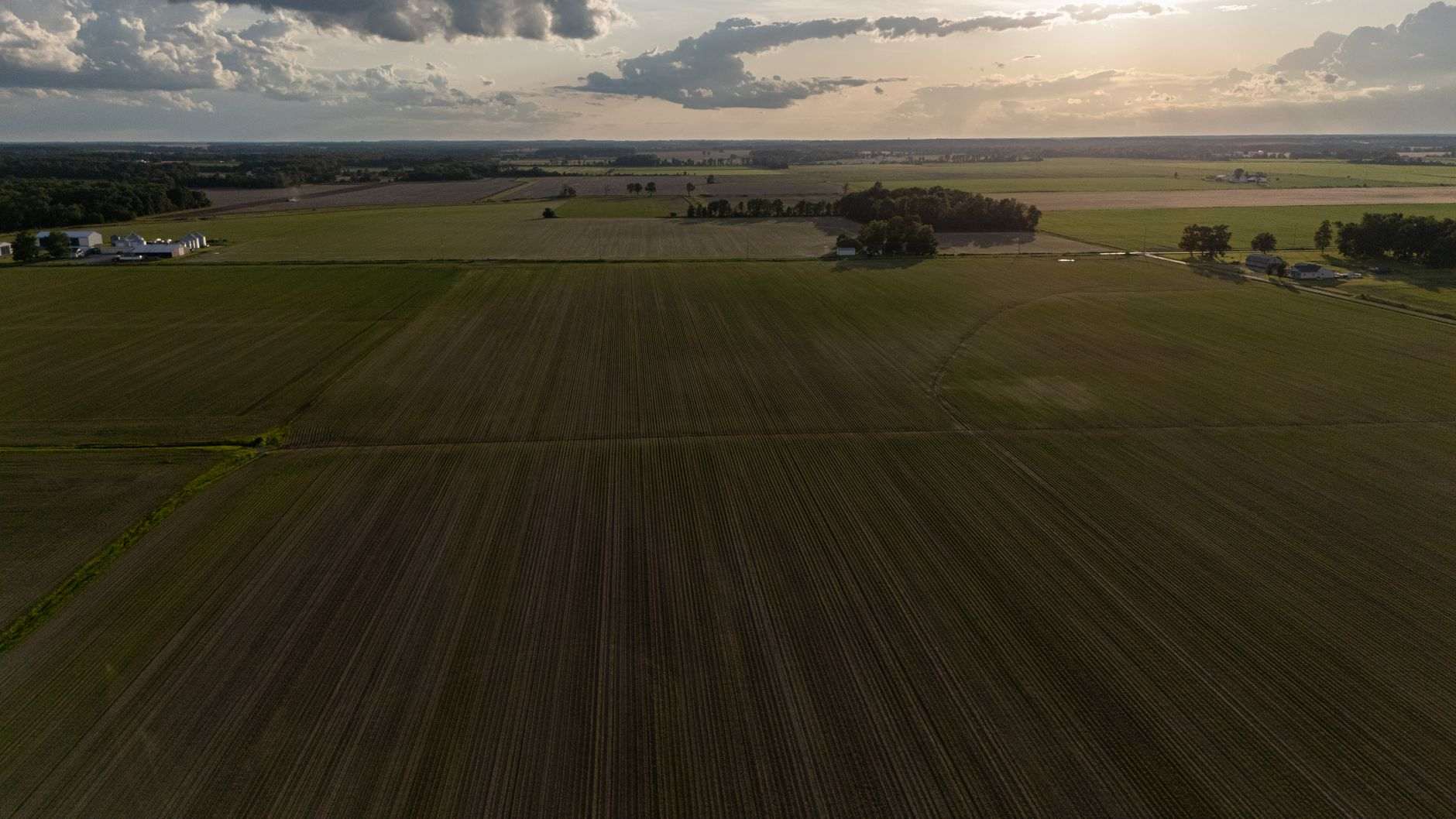
Engineering for the field
What offline-first and seasonality actually change about a build
These aren't abstractions — they're specific decisions that show up in the architecture, the testing plan, and the delivery schedule.
Conflict resolution has to be designed, not assumed
When two devices edit the same field record offline and sync hours apart, something has to decide which version wins. That logic gets designed deliberately, with a grower-visible way to spot and fix a conflict, rather than left to whichever sync happens to run last, silently discarding the other person's work.
Bandwidth budgets shape what syncs and when
Full-resolution imagery and dense sensor logs don't sync over a weak rural connection the same way they would over office broadband. Data gets prioritized and compressed for what needs to move now versus what can wait for a stronger signal back at the shop.
Testing has to include a genuinely bad connection
An app tested only on office WiFi will pass every test and still fail in a field. Testing against throttled, intermittent, and fully offline conditions — not just a fast connection and a spinner — is what catches the failure modes that actually occur in use.
Delivery timelines are built around the calendar, not against it
Scheduling a major rollout or a required workflow change during planting or harvest guarantees it doesn't get adopted. Builds, training, and go-lives get planned for the windows when a farm operation actually has attention to give them.
Hardware constraints are part of the spec, not an afterthought
Ruggedized tablets, in-cab displays, and sensors that survive dust, vibration, and temperature swings impose real constraints on UI and battery use that a typical mobile app spec never considers.
Power availability limits what a sensor deployment can assume
A soil or weather sensor in a remote field often runs on solar or a battery expected to last a season without a site visit, which puts real constraints on transmission frequency and firmware efficiency that a plug-in-anywhere prototype never has to solve for.
Data & interoperability
Who owns the data, and whether it can leave the platform
This has become a live negotiating point with growers, not a technical footnote, and it changes how a system should be architected from the start.
Growers increasingly ask this question before signing up
A platform that treats field-level yield, application, and soil data as its own proprietary asset — with no export path — is a harder sell than it was five years ago, as growers have watched other industries get locked into vendors that monetized their own data back to them at their own expense.
ADAPT and other open formats reduce lock-in
The AgGateway ADAPT framework standardizes data exchange between different equipment and software platforms, and building an export or import path against it — rather than a proprietary format only your platform reads — is what lets a grower actually switch tools without losing years of field history.
Reporting for USDA programs and crop insurance needs clean records
Growers participating in USDA conservation or subsidy programs, or filing crop insurance claims, need exportable, dated field records that satisfy an outside reviewer's format expectations, not just an internal dashboard view only the platform can render.
Multi-vendor operations are the norm, not the exception
A single farm operation commonly runs equipment from more than one manufacturer alongside software from a different vendor entirely, and a system that assumes it's the only source of truth creates exactly the reconciliation problem it was supposed to solve.
Data portability is a retention strategy, not a giveaway
Counterintuitively, an easy export path tends to increase trust and retention rather than accelerate churn — growers commit more fully to a platform they know won't hold their own records hostage if the relationship ends.
Aggregated, anonymized benchmarking is a separate conversation from raw data
Some platforms offer growers cross-farm benchmarking built on pooled, anonymized data, and that's a legitimate value exchange — but it has to be opt-in and clearly separated from a grower's own raw records, not bundled into the same consent checkbox by default.
What it costs
Agriculture software development pricing
Real ranges. The variable that moves a quote most is how many pieces of equipment or sensor hardware the software has to integrate with, and whether that hardware's data format is documented or has to be reverse-engineered.
| Engagement | Commitment | Timeline | What's included |
|---|---|---|---|
| Field data collection app | Fixed scope | 6 – 10 weeks | Offline-first mobile app for scouting, input logging, or field records, with a sync engine built for intermittent connectivity from day one rather than added later. |
| IoT / sensor telemetry pipeline | Fixed scope | 8 – 14 weeks | Ingestion and processing pipeline for soil, weather, or bin sensor data, including the batching and retry logic that survives a weak cellular link without losing readings. |
| Equipment telematics integration | Fixed scope | 6 – 12 weeks | ISOBUS or manufacturer API integration (John Deere, Case IH, Trimble) reconciling machine data against planned field operations. |
| Full farm management platform | Fixed scope | 16 – 30 weeks | Multi-field, multi-user FMIS combining records, telemetry, imagery, and reporting, built offline-first with a real sync architecture throughout. |
| Traceability & compliance system | Fixed scope | 6 – 12 weeks | Farm-to-buyer tracking built to FSMA 204 or a named buyer's requirements, with the audit trail a compliance review or recall actually needs. |
Ranges assume US-based senior engineers and include field-condition testing rather than quoting it separately. A quote well below these bands usually assumes reliable connectivity somewhere in the architecture, and that assumption is what breaks first once the software leaves the office — often during the exact week it was supposed to prove itself.
How an engagement runs
From an off-season start to an in-season rollout
Week one is a field-conditions audit — what connectivity actually exists where the software will be used, what equipment and sensors it has to talk to, and what the real seasonal window is for rollout and training. The sync architecture and conflict-resolution rules get designed before feature work starts, since retrofitting offline-first behavior into a connection-first build is close to a rewrite. Testing runs against throttled and fully offline conditions throughout, not as a final pass. Delivery is scheduled to land in the off-season window a given operation actually has time to adopt something new, with the build timeline working backward from that date rather than forward from a generic quote, so training happens when there's actually time to sit through it.
Related
Related
Agriculture builds lean on sensors, field data, and mobile use in poor connectivity. These pages go deeper.
Questions
Frequently asked questions
What teams ask before a first call.
A field data collection app is the smallest of these, an IoT telemetry pipeline sits in the middle, and a full farm management platform is the largest. The table above sets out what each engagement includes.
What moves the number most is how much equipment and sensor hardware the software has to integrate with, and how well documented that hardware is. A scoping call produces a figure; a page cannot, because two farm platforms with the same feature list can differ by a factor of three on integration alone.
It means the app is fully functional with zero network connection — not a cached, read-only fallback, but complete functionality with data stored locally and queued to sync once connectivity returns. That's an architectural decision made from the start of a project, because retrofitting it into software built assuming a live connection is close to a rebuild.
The piece that actually takes engineering judgment is conflict resolution: when two devices edit the same record offline and sync hours apart, the system needs a deliberate rule for which version wins, and a way for the user to see and fix a conflict rather than silently losing data. Getting this wrong is how a grower loses trust in the software after a single bad sync, even if every other feature works.
Yes. ISOBUS (ISO 11783) is the open standard for equipment-to-implement data, but major manufacturers layer their own proprietary telematics APIs on top of it — John Deere Operations Center, Case IH AFS Connect, and similar platforms each have their own quirks and access requirements.
The scoping question is which specific equipment and manufacturer APIs a given operation runs, since integration effort varies significantly by vendor and by how well-documented that vendor's API actually is. That gets mapped out during discovery before a fixed quote is given.
The app stores data locally on the device and functions completely without a connection — logging, photos, GPS-tagged notes, whatever the workflow requires — then syncs automatically once the device reaches a signal, whether that's back at the farm shop or at the edge of a field with one bar.
We design the sync layer to prioritize what actually needs to move first when a connection does appear, since a weak rural connection often can't move everything at once, and we test against throttled and offline conditions throughout the build rather than assuming a demo on office WiFi represents real field use.
The off-season — post-harvest through pre-planting for most row-crop operations — is when a farm actually has the attention and staff time to participate in discovery, testing, and training. Starting a build so it's ready to roll out mid-planting or mid-harvest usually means it sits unused until the next off-season regardless of how ready the software is.
We work backward from the rollout window a given operation actually has, which often means starting discovery well before the off-season begins so the build is ready to deploy right when there's time to adopt it, rather than arriving a month too late for that window.
In the US, FSMA 204 (the Food Safety Modernization Act's traceability rule) sets specific record-keeping requirements for high-risk foods, and beyond the regulatory floor, individual large buyers increasingly impose their own traceability requirements as a condition of the contract, which can be stricter than the law requires.
The practical engineering question is what specific data has to be captured at each step — harvest, packing, shipping — and in what format a buyer or auditor expects to receive it, since that shapes the data model more than the regulation's text does on its own. Getting that format wrong is usually discovered during an actual audit, which is a far more expensive time to find out than during the build.