
 AI ERP with agents inside the systems you run
 AI phone and voice agents for real calls
 LLM.coPrivate, self-hosted LLM deployments
 Legal AI infrastructure for firms
 AI RFP discovery and response drafting
 Automatic.coBusiness process automation
 CyberAttack.aiThreat detection and defense
 Secure AI virtual data rooms
 DigitalSign.coAI-designed digital signage for any screen
 cstm.aiCustom AI hardware, software, and engineers
How to Build a Multi-Tenant SaaS Platform With Secure Data Isolation
Most buyers approve a multi-tenant architecture by looking at one slide: the data model. Pooled, schema-per-tenant, database-per-tenant. Pick one, ship it. In reality the data model is the easy part. The hard part is every other layer that has to agree with it: how a request proves which tenant it belongs to, how Postgres refuses to serve the wrong rows, where tenant keys live, which background jobs see which data, and what evidence a SOC 2 auditor will accept at the end of the year.
This is the stack a technical founder or enterprise buyer actually has to approve. The SaaS market is still growing fast — projected to reach $465.03 billion in 2026 — and the attack surface is growing with it. Broken access control is still ranked A01 in the OWASP Top 10 for 2025, and tenant isolation bugs are the enterprise-grade version of that failure. Treat the sections below as the checklist.
Tenant Resolution Happens Before the First Query
A tenant isolation story that starts at the database is already late. The question is: by the time a request reaches your ORM, how does the process know which tenant it is serving, and can that answer be forged?
The common pattern is a signed access token (JWT or opaque, backed by a session store) that carries a tenant_id claim issued at login. Subdomain or path-based routing resolves the tenant at the edge; middleware validates the token, cross-checks the claim against the subdomain, and attaches the resolved tenant to a request-scoped context. Nothing downstream reads the tenant from a header, a query string, or the request body. If the token and the hostname disagree, the request is rejected before it hits a controller.
Two rules carry most of the weight. First, every data-access function takes the tenant from the request context, never from its arguments. Second, the context is immutable for the life of the request. A background job that needs to act on behalf of a tenant creates a new context from a stored tenant reference, not from whatever thread-local happened to be around.
Postgres RLS Is the Enforcement Floor
Application code forgets things. Row-level security does not. A policy on every tenant-scoped table, keyed off a session variable, turns "we remember to filter" into "the planner filters for us." The pattern is well-worn: set a GUC at the start of each transaction, write a policy that compares tenant_id to that GUC, and let Postgres enforce the predicate on every query plan.
Three details decide whether this holds up in production:
- Use SET LOCAL, never SET. With connection pooling, a session-scoped setting bleeds across requests the moment a connection is returned and reissued. SET LOCAL scopes the value to the transaction, so pool reuse is safe.
- Prefix every composite index with tenant_id. Policy evaluation becomes an extra predicate on the plan. Without a leading tenant column, large tables fall off the planner's happy path quickly.
- Enable FORCE ROW LEVEL SECURITY on tables holding tenant data so the owning role sees the same filtered view as application users. Reserve BYPASSRLS for roles that genuinely need cross-tenant reads — ETL, support tooling, warehouse replication — and never grant it to the application role.
Teams that skip the composite index work tend to blame RLS when a query gets slow at a million rows. The measured overhead of a well-indexed policy is well under a millisecond; the overhead of a forgotten index is two orders of magnitude higher. Build the indexes before you ship the policies.
Silo, Pool, or Bridge Depends on the Tier You Sell
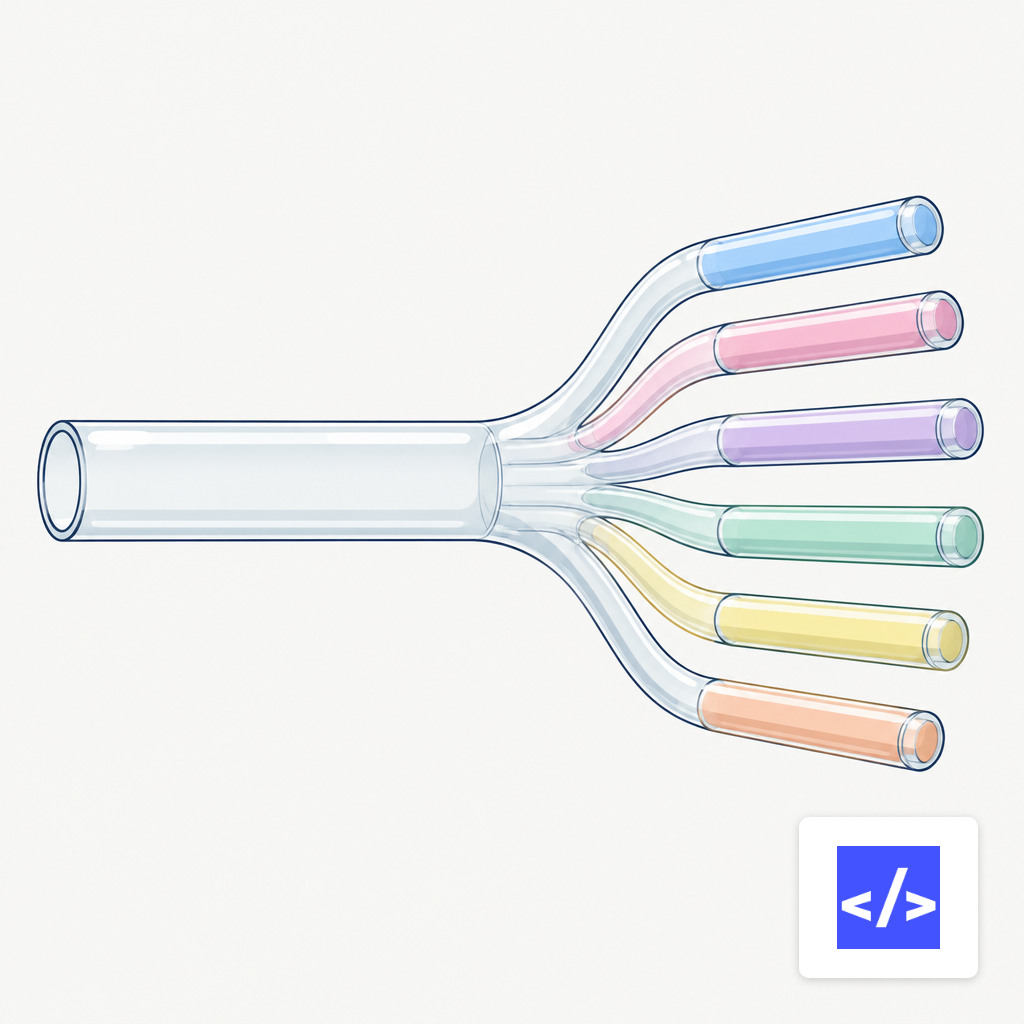
The data model choice is not pooled-vs-isolated. AWS's canonical framing uses three models — silo, pool, and bridge — and the bridge model combines silo and pool approaches depending on each resource's regulatory and noisy-neighbor profile. In Postgres terms:
- Pool (shared schema + RLS): cheapest to operate, fastest migrations, acceptable for most SMB and mid-market tenants. Breaks down when one tenant needs its own retention policy, encryption key, or region.
- Bridge (schema-per-tenant inside a shared cluster): stronger logical isolation, per-tenant backup and restore, per-tenant retention. Catalog bloat starts to hurt the planner past roughly 5,000–10,000 schemas on a single instance.
- Silo (database-per-tenant, often per-cluster for the top tier): required for regulated workloads, BYOK, and residency commitments. Operationally expensive — every migration runs N times — but it is what a regulated enterprise buyer actually wants to see.
A workable rule of thumb at the deal level: pool below roughly $50K ACV, bridge from there into the mid six figures, silo for named enterprise logos and anything touching HIPAA, PCI, or data residency. The architecture should allow a tenant to graduate from pool to bridge to silo without a rewrite. In practice that means abstracting the connection resolver behind a tenant router from day one, even if every tenant currently resolves to the same cluster. The same principle shows up in a low-code MVP replatform: it is cheap to leave a seam, expensive to carve one in later.
Per-Tenant KMS Keys Shrink the Blast Radius
A single application-wide encryption key gives you encryption at rest and nothing else. Compromise it once and every tenant is exposed. Envelope encryption with per-tenant key-encryption keys (KEKs) is the baseline for anything an enterprise buyer will sign.
The hierarchy is three layers. A master key, HSM-backed, lives in KMS and never leaves it. Per-tenant KEKs are wrapped by the master key. Data-encryption keys (DEKs) are generated on demand, used to encrypt the payload, and stored next to the ciphertext in their wrapped form. To read, the service asks KMS to unwrap the DEK and decrypts in memory. There is no path from Tenant A's KEK to Tenant B's data, because Tenant B's DEKs were never wrapped by Tenant A's KEK.
The operational trap is KMS call volume. A naive implementation calls KMS on every read. The fix is a short-lived in-process DEK cache keyed by tenant, with jitter and a stampede guard — NICE Actimize reduced AWS KMS costs by 77% moving to a hierarchical caching keyring without weakening per-tenant isolation. BYOK and customer-managed keys fall out of the same architecture: swap the KEK source from your KMS to the customer's. Enterprise buyers who care about this feature really care about it, and it is table stakes for financial services and healthcare pods — the same discipline we apply when we build custom banking software.
Jobs, Caches, and the Noisy Neighbor Problem
Isolation that stops at the primary database is a false floor. The 2023 ChatGPT incident where a Redis client bug leaked chat and billing data across accounts was not a database bug. It was a cache bug one layer up.
Three places need the same tenant discipline as the database:
- Background jobs. Every enqueued job carries a tenant_id in its payload, and the worker rehydrates the tenant context before it opens a database handle. Dedicated per-tenant queues for the top tier give you back-pressure isolation; shared queues with weighted fair scheduling work for the pool tier.
- Caches. Namespace every Redis key with the tenant. Namespace the pub/sub channels too. Audit the serializer — a shared object pool that holds references across tenants is the same bug class as the Redis incident above.
- Rate limits and quotas. Noisy-neighbor controls belong at the tenant level, not just the IP or user level. A single tenant running a bad report at 3am should not slow down the other 400 tenants on the cluster.
Treat multi-tenant API development as a tenant-aware control plane, not a stateless gateway. Every quota, every webhook, every event stream carries a tenant and is observable per tenant.
Audit Evidence Is Built, Not Collected
SOC 2 Type II is a buying requirement, not a nice-to-have — 78% of enterprise buyers require it. The reviewer will ask for evidence of access controls, encryption, change management, and incident response, continuously, over a six- to twelve-month window. Teams that try to assemble that evidence a month before the audit lose weeks and still get findings.
Build the evidence pipeline alongside the product. Every tenant-scoped query logs the resolved tenant and the acting principal. Every KMS decrypt call is logged with the tenant and the caller. Every schema migration goes through code review with a ticket reference. Every production access is brokered through a bastion or workflow that records the actor, the tenant, and the duration. None of this is exotic — it is boring plumbing that pays off twice a year.
What a Buyer Should Actually Approve
A multi-tenant SaaS architecture is secure when every layer agrees on who the tenant is and refuses to serve the wrong one on its own. Tenant resolution at the edge. RLS at the database. Per-tenant KEKs at rest. Tenant-aware jobs, caches, and quotas. An audit log that is already an audit log, not a project to build one.
None of these controls is novel. The failure mode is almost always a layer that was skipped because the data model slide looked complete. If you are scoping a build and want a second pair of eyes on the isolation stack before you commit, that is the kind of review our team at DEV.co runs before the first line of production code.
