
 AI ERP with agents inside the systems you run
 AI phone and voice agents for real calls
 LLM.coPrivate, self-hosted LLM deployments
 Legal AI infrastructure for firms
 AI RFP discovery and response drafting
 Automatic.coBusiness process automation
 CyberAttack.aiThreat detection and defense
 Secure AI virtual data rooms
 DigitalSign.coAI-designed digital signage for any screen
 cstm.aiCustom AI hardware, software, and engineers
How Much Does It Cost to Build a Custom AI Agent
Everyone has a budget number in mind for an AI agent, and almost nobody has the math behind it. The phrase covers a $25,000 Slack bot and a $2M autonomous claims adjuster, which is why procurement conversations go sideways in the first ten minutes. The useful question is not "what does an agent cost" but "which tier of agent are you actually buying, and what does its first three years look like on a spreadsheet."
This piece gives 2026 dollar ranges for four agent tiers, works through the token math behind inference bills, compares the orchestration frameworks on cost and lock-in, and lays out a total cost of ownership model you can defend in a budget meeting. Numbers assume a US-based senior engineering team, production SLAs, and reasonable security posture. Offshore and prototype-only budgets will be lower, and will usually ship something you throw away.
What You Are Actually Buying at Each Tier
"AI agent" is a tier, not a product. Four honest tiers, with 2026 fully loaded build costs for a US delivery team:
- Tier 1 — Task agent ($25K–$75K, 4–8 weeks). One LLM, one or two tools, a prompt, and a thin UI. Think a Slack bot that drafts customer replies against a knowledge base. No multi-step planning, no persistence beyond a conversation.
- Tier 2 — Workflow automation agent ($75K–$200K, 8–16 weeks). One or two agents inside a defined business process: lead qualification, invoice coding, support triage. Deterministic steps, tool calls to 3–8 internal APIs, human approval gates, audit logs.
- Tier 3 — Multi-agent system ($200K–$600K, 4–8 months). Specialist agents coordinated by a planner, retrieval over proprietary data, long-running jobs, role-based access control, evaluation harness. This is where RAG, vector databases, and observability stop being optional.
- Tier 4 — Enterprise autonomous agent ($600K–$2M+, 6–12 months). Agents with write access to systems of record, financial controls, SOC 2 scope, red-team testing, fine-tuned or self-hosted models, dedicated SRE coverage. The build is a minority of the cost once you factor in year-one operations.
The gap between tiers is not model quality. It is engineering around the model: evaluation, guardrails, state, recovery, and the plumbing to the rest of the business. For context on how teams staff this, the piece on building an AI development team breaks down the roles that actually appear on the invoice.
Where the Money Goes in a Sample Tier 3 Build
A representative $420,000 multi-agent build over 20 weeks, before any runtime costs:
- Discovery, process mapping, success metrics: $35,000 (4 weeks, part-time product + architect)
- Software engineering (two seniors, one mid, part-time ML engineer): $240,000
- Orchestration framework setup, prompt and tool scaffolding: included above, but roughly $25,000 of effort
- Vector database and RAG pipeline (pgvector or Pinecone, ingestion jobs, re-ranking): $35,000
- API integrations to 5–8 internal systems: $45,000
- Security review, SSO, PII handling, prompt-injection tests: $25,000
- Evaluation harness, regression suites, red-team: $25,000
- Hosting setup (AWS or GCP, IaC, CI/CD): $15,000
Runtime costs — LLM inference, vector DB, hosting, observability — are separate and recurring. A useful rule of thumb: year-one runtime for a Tier 3 agent lands between $60,000 and $250,000 depending on volume and model mix. The production RAG cost breakdown is the closest neighbor to this math and worth reading alongside it.
The Token Math Nobody Shows You
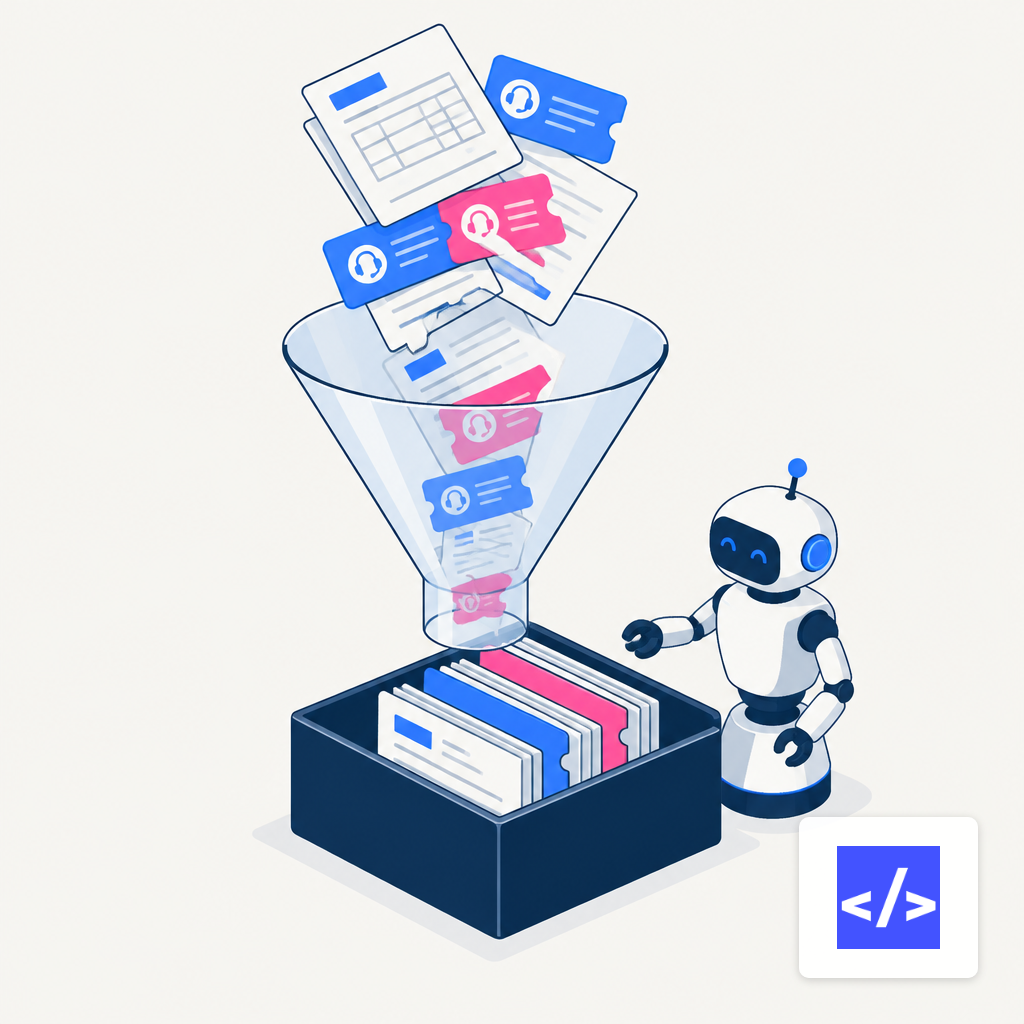
Most inference surprises come from one place: conversation history. In an analyzed Claude session, a 14-token question that cost $0.0018 at turn 1 cost roughly $2.41 by turn 260, a 1,339× per-message increase caused solely by growing context. Agents that re-feed full history on every tool call pay this tax on every step.
Current 2026 rates to anchor the math: GPT-4o is $2.50 per million input tokens and $10.00 per million output, and Claude Sonnet 4.6 is $3/$15, with Haiku 4.5 at $1/$5. Over the last two years, GPT-4-class pricing has fallen roughly 10x, from $30 to $2–3 per million input tokens. Budget forward with that trend only cautiously; reasoning and tool-calling tokens have gone the other way per task.
A worked example. A support triage agent handles 20,000 tickets a month. Each ticket averages 3 LLM calls, with 4,000 input tokens (prompt + retrieved docs + history) and 400 output tokens per call. Monthly tokens: 240M input, 24M output. On GPT-4o: $600 + $240 = $840. On Sonnet 4.6: $720 + $360 = $1,080. On Haiku 4.5: $240 + $120 = $360. Add prompt caching (roughly 50–90% off repeated system prompts) and the bill drops another 30–50%. Add an agent-to-agent debate pattern without a termination cap and open-ended loops can consume 5–10× expected tokens.
LangGraph, CrewAI, AutoGen, or Custom Orchestration
Framework choice drives cost in two ways: how predictable your token spend is, and how much vendor risk you take on. The honest 2026 picture:
- LangGraph. Graph-based state machines, explicit nodes, native checkpointing, strong human-in-the-loop. The default for stateful production workflows. Token costs are predictable because each node is a discrete call. LangSmith for tracing is a paid add-on.
- CrewAI. Role-based crews, fast to prototype, MIT licensed. Sequential crews are predictable; hierarchical crews can surprise your bill. Good when the workflow genuinely maps to specialist roles.
- AutoGen. Conversation-based multi-agent. The project is in maintenance mode with the README pointing to Microsoft Agent Framework. Still fine for research; a weak choice to start a new production build in late 2026.
- Custom orchestration. A thin state machine in your own code around raw SDK calls. Highest control, lowest lock-in, roughly 20–40% more initial engineering. Right for Tier 4, for regulated workloads, and for teams who have been burned by framework churn.
Lock-in is subtle. LangGraph ties you to the LangChain ecosystem and its upgrade cadence. CrewAI ties you to a smaller corporate backer. AutoGen ties you to a project its own vendor is sunsetting. Custom orchestration ties you to your own engineers, which is the only lock-in you can fire.
RAG vs Fine-Tuning, Cloud vs On-Prem
For most agents, RAG is the right first move. Fine-tuning costs $5,000–$50,000 per iteration, ages poorly as base models update, and rarely beats retrieval on factual grounding. Fine-tune when you need a specific tone, structured output format, or domain vocabulary the base model fumbles. Fine-tune on top of a smaller model to cut inference cost, not to teach it new facts.
Cloud APIs win on year one for almost everyone. Self-hosting an open-weight model (Llama, Qwen, DeepSeek on vLLM) starts to pencil out above roughly 500M–1B tokens per month, when GPU amortization and ops staff become cheaper than per-token API fees. On-prem is a compliance decision more than a cost decision; FedRAMP High, HIPAA with no BAA appetite, and some financial workloads force it. Budget 2–4× the cloud TCO for the first year of a serious on-prem deployment, then crossover depending on volume. The case for keeping custom AI rollouts in-house covers the control side of that tradeoff.
Three-Year TCO and a Defensible ROI Model
A Tier 3 agent, built for $420K, with $140K year-one runtime and operations, typically runs $120K/year in years two and three (lower inference as prices fall and prompt caching matures, offset by feature work). Three-year TCO: roughly $800K. A Tier 4 build at $1.4M with $600K year-one ops and $400K/year after lands near $2.6M over three years. Those are planning numbers, not quotes.
The ROI side is where buyers get in trouble. S&P Global found 42% of companies abandoned most of their AI initiatives in 2025, up from 17% in 2024, and Carnegie Mellon and Salesforce measured agent task completion at roughly 30–35% on multi-step work. A defensible model does not assume 100% deflection. It assumes 40–60% automation on tickets the agent is scoped for, human review on the rest, and a measured error rate with a cost attached.
A workable template: (tasks per year) × (hours saved per task) × (fully loaded hourly cost) × (realistic automation rate) − (build amortization) − (annual run cost) − (error cost). For a support team doing 240,000 tickets a year at 12 minutes and $45/hour fully loaded, 50% automation yields $1.08M of labor time back. Subtract $270K of three-year build amortization, $140K/year runtime, and a 5% error rework cost of about $54K, and the first-year net lands near $615K. Payback in roughly 7–9 months. Those are inputs you can argue with in a budget meeting, which is the point. For adjacent benchmarks the 2026 ROI statistics piece is a good sanity check.
What This Means for Your Next Build
Pick the smallest tier that solves the real problem. A well-scoped Tier 2 workflow agent will embarrass a sprawling Tier 3 build 80% of the time, and ship in a quarter instead of three. Pin your framework choice to how stateful the work is, not to GitHub stars. Model the token math on worst-case conversation length, not average. Build the evaluation harness before you build the second agent. If none of that is in the SOW, you are buying a demo, not a system. Teams that need a sober look at scope and architecture can start with our AI development services or the broader approach described on our about page.
