
 AI ERP with agents inside the systems you run
 AI phone and voice agents for real calls
 LLM.coPrivate, self-hosted LLM deployments
 Legal AI infrastructure for firms
 AI RFP discovery and response drafting
 Automatic.coBusiness process automation
 CyberAttack.aiThreat detection and defense
 Secure AI virtual data rooms
 DigitalSign.coAI-designed digital signage for any screen
 cstm.aiCustom AI hardware, software, and engineers
10 Must-Know Features of Modern Operating Systems
An operating system (OS) is the software that sits between a computer’s hardware and the applications you run. It decides which program gets the processor, where data lives in memory, how files are stored, and who is allowed to do what.
Windows, macOS, Linux, Android, and iOS look very different on the surface, but they share the same core features. Below are the ten features every modern operating system provides, what each one actually does, and why it matters if you use, manage, or build software for these platforms.
1. Graphical User Interface (GUI)
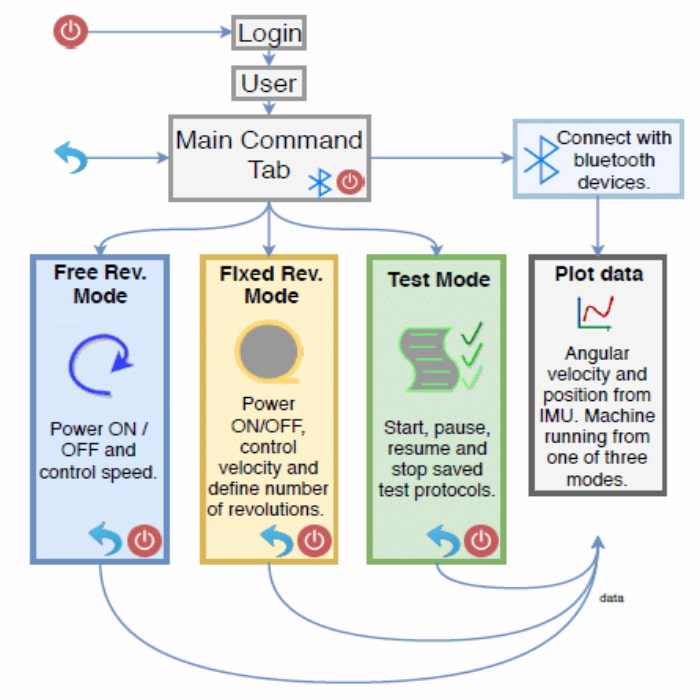
The graphical user interface (GUI) is the visual layer of windows, icons, menus, and buttons that lets people use a computer without typing commands. Touch, gestures, and voice have extended it on phones and tablets.
Most operating systems still ship a command-line interface (CLI) alongside the GUI: Terminal on macOS, PowerShell on Windows, and the shell on Linux. Developers and administrators rely on it for automation and remote management, and many servers run without a GUI at all.
2. Process Management and Multitasking
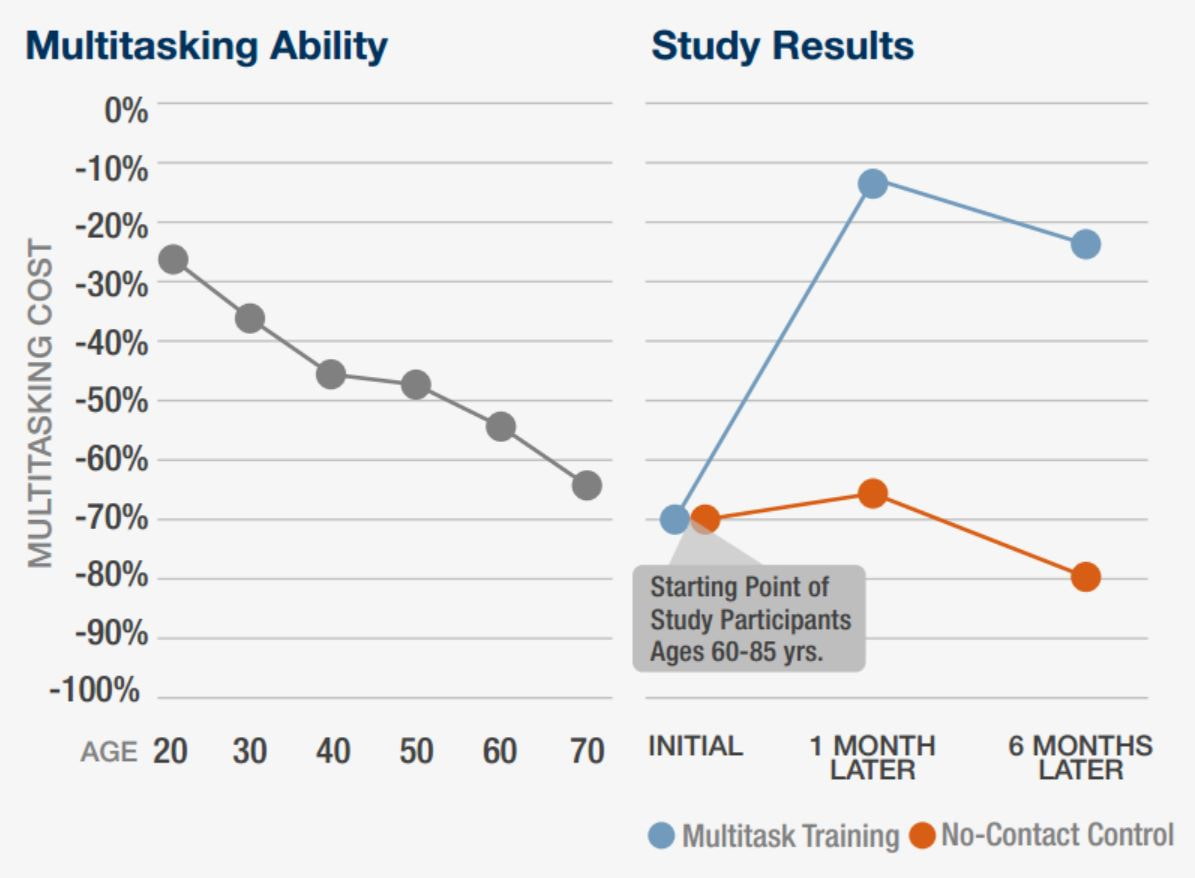
Multitasking lets you run a browser, an editor, a music player, and an email client at the same time. Under the hood, the OS creates a process for each program, and a scheduler hands out slices of CPU time so quickly that everything appears to run at once.
Modern systems use preemptive multitasking: the OS, not the application, decides when a task gives up the processor. That keeps one frozen program from locking up the whole machine. On multi-core processors, the scheduler also spreads threads across cores so work truly runs in parallel.
3. Memory Management and Virtual Memory
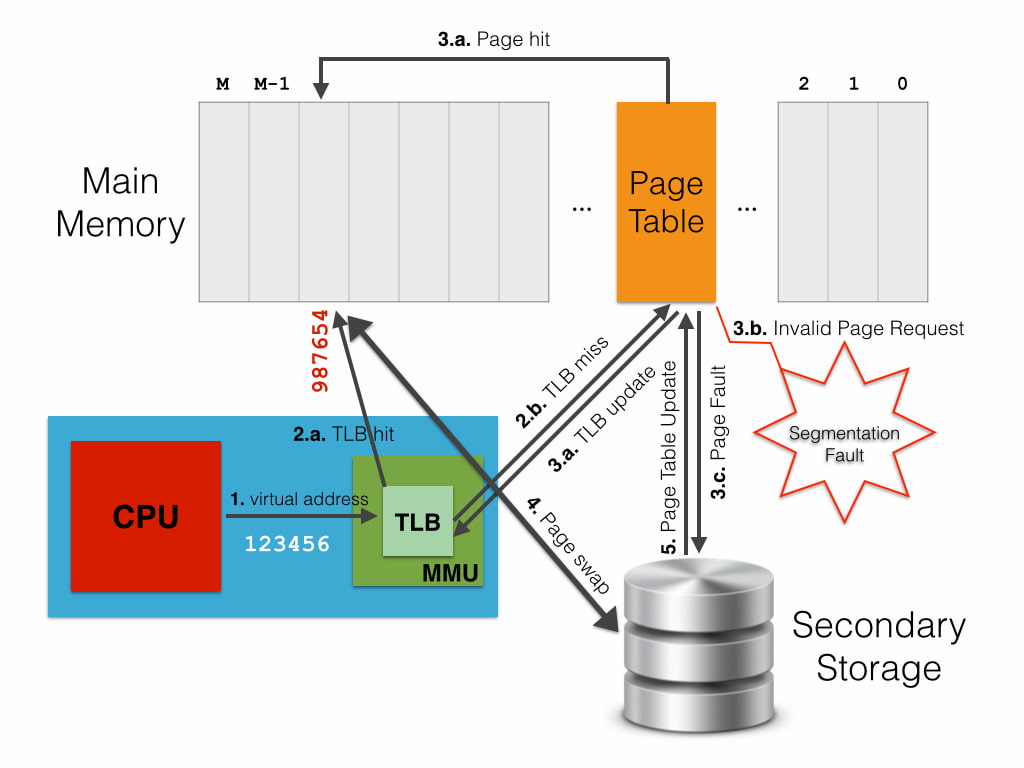
The OS gives every process its own private address space, so one program can’t read or overwrite another’s memory. Virtual memory extends this: the system maps each process’s addresses onto physical RAM in fixed-size pages, and when RAM runs short it moves less-used pages out to disk (paging or swapping) and brings them back when needed.
The result is the illusion of more memory than the machine physically has, plus isolation that keeps crashes contained. Memory management at this level is exactly where C++ and Rust are most often compared for systems-level development: both give you direct control over how a process uses memory, with very different safety guarantees.
4. File System Management
The file system organizes data on storage into files and folders, tracks where each piece physically lives, and records metadata such as size, owner, and permissions. Common examples include NTFS on Windows, APFS on macOS and iOS, and ext4 on Linux.
Modern file systems add journaling or copy-on-write designs that protect data if the power fails mid-write, along with snapshots, compression, and built-in encryption.
5. Security and Privacy Features
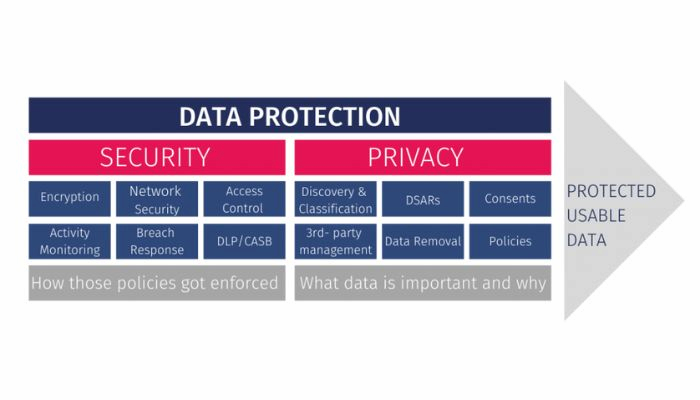
Security is built into every layer of a modern OS. User authentication (passwords, biometrics, passkeys) controls who gets in. Access control and file permissions decide what each user and app may touch. Full-disk encryption protects data if a device is lost, and secure boot checks that the system hasn’t been tampered with before it starts.
Applications are increasingly sandboxed, meaning each app runs with only the permissions it needs, and the OS asks before granting access to the camera, microphone, location, or contacts. Combined with built-in firewalls, malware protection, and automatic security updates, these features are the first line of defense. For teams that want to go further, there is a wide range of open-source security tooling that builds on what the OS provides.
6. Device Management and Drivers
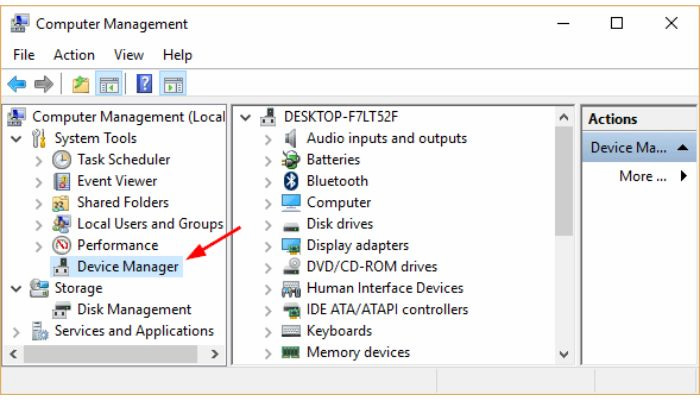
The OS manages communication between software and hardware: keyboards, displays, printers, storage, network cards, and GPUs. It does this through drivers, small pieces of software that translate the OS’s standard requests into instructions a specific device understands.
Plug and play detects new hardware and loads the right driver automatically, and the OS also manages power, putting idle components to sleep to extend battery life.
7. Networking
Every modern operating system includes a full networking stack: Wi-Fi and Ethernet drivers, TCP/IP, DNS resolution, VPN support, and a firewall. That is what lets applications reach the internet, share files and printers on a local network, and talk to servers in the cloud without implementing any of it themselves.
8. Interoperability and Cloud Integration
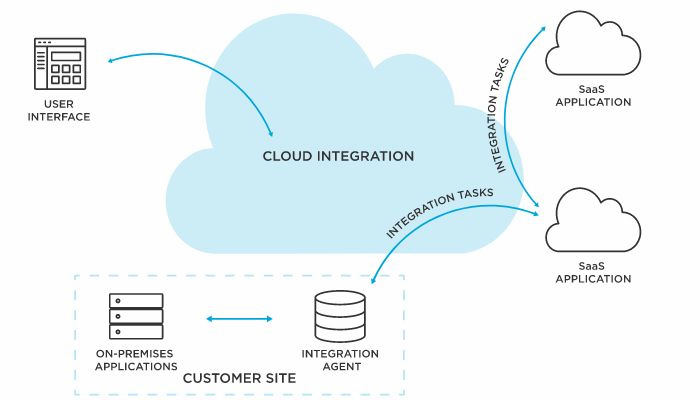
Interoperability means an operating system works with other systems, devices, and standard file formats. Support for common protocols is why a file saved on Windows opens on a Mac, and why iOS and Android phones can share the same cloud services.
Cloud integration takes this further. Account sign-in, settings, photos, and documents sync across devices through services such as iCloud, OneDrive, and Google Drive, and many applications now run largely in the cloud. For businesses, the same idea scales up to running workloads across several providers; see our guide to multi-cloud management.
9. Software Management and Updates
Operating systems handle installing, updating, and removing software. On phones this happens through app stores; on desktops through app stores and installers; on Linux through package managers such as apt and dnf.
Automatic updates matter more than any other item on this list for security: most successful attacks exploit vulnerabilities that already have a patch. Running legacy systems on an operating system that no longer receives updates is one of the most common risks we see in older software estates.
10. Accessibility and Customization
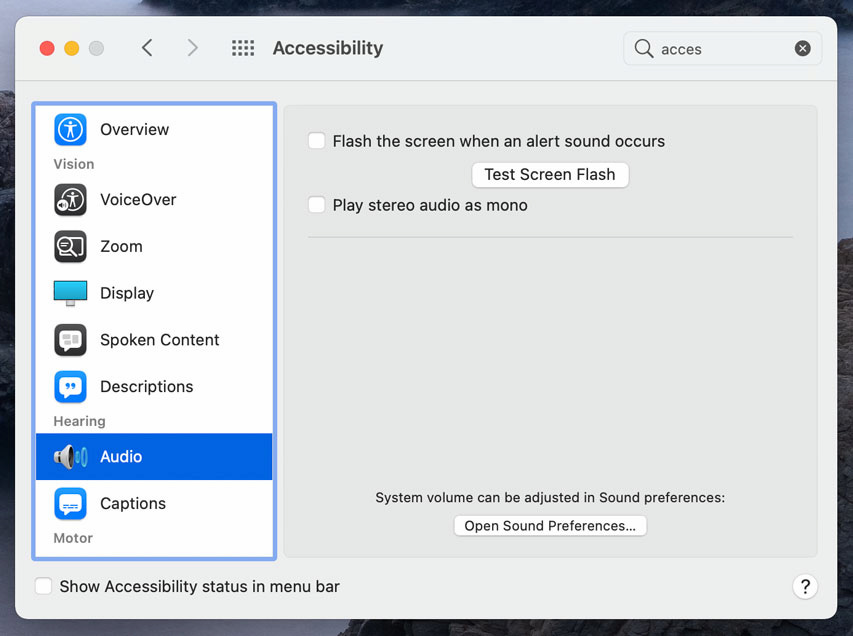
Accessibility features make computers usable for everyone. Screen readers read on-screen text aloud for people who are blind or have low vision, speech recognition and voice control replace the keyboard and mouse, live captions transcribe audio, and magnification, high-contrast modes, and dark mode help with visual comfort.
Customization lets users tailor the system to how they work: themes, layouts, default apps, notifications, and performance settings. For developers, these OS-level preferences matter, because well-built apps respect settings such as text size, reduced motion, and color scheme instead of overriding them.
Operating System Features Compared
| Feature | Windows | macOS | Linux | Android / iOS |
|---|---|---|---|---|
| Default interface | GUI + PowerShell | GUI + Terminal | GUI optional; CLI first on servers | Touch GUI |
| Common file system | NTFS | APFS | ext4, Btrfs, XFS | ext4/F2FS (Android), APFS (iOS) |
| Software install | Microsoft Store, installers, winget | App Store, installers, Homebrew | Package managers (apt, dnf) | Google Play / App Store |
| App sandboxing | Partial (Store apps) | Yes (App Store apps) | Optional (Flatpak, Snap) | Yes, all apps |
| Source model | Proprietary | Proprietary (open-source core) | Open source | Open-source core (Android) / proprietary (iOS) |
Frequently Asked Questions
What are the main functions of an operating system?
The core functions are process management, memory management, file system management, device management, and security. A user interface, networking, and software management sit on top of those.
What is the most important feature of an operating system?
Resource management: sharing the processor, memory, and storage safely between many programs. Every other feature depends on it.
What are the different types of operating systems?
Common types include desktop (Windows, macOS, Linux), mobile (Android, iOS), server (Linux, Windows Server), real-time operating systems for embedded and industrial devices, and distributed systems that coordinate many machines.
Final Thoughts
Operating systems have come a long way since the early days of computing. The features above, from scheduling and virtual memory to sandboxing and automatic updates, quietly do the work that makes computers fast, stable, and secure.
If you build software, these features shape every decision you make, from which platforms to target to how your application handles memory, files, and permissions. When you need an experienced team to build for Windows, macOS, Linux, or mobile, talk to DEV.co.