
 AI ERP with agents inside the systems you run
 AI phone and voice agents for real calls
 LLM.coPrivate, self-hosted LLM deployments
 Legal AI infrastructure for firms
 AI RFP discovery and response drafting
 Automatic.coBusiness process automation
 CyberAttack.aiThreat detection and defense
 Secure AI virtual data rooms
 DigitalSign.coAI-designed digital signage for any screen
 cstm.aiCustom AI hardware, software, and engineers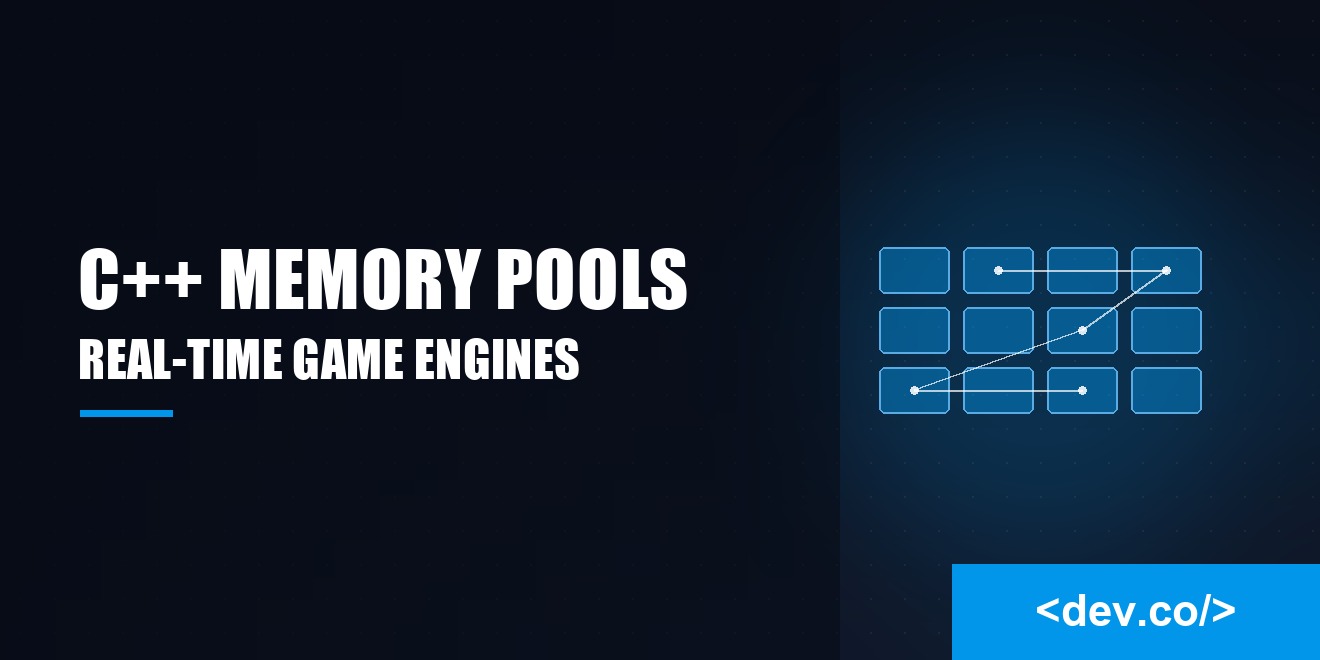
C++ Memory Pool Design for Real-Time Game Engines
When you press “play” and your game world springs to life without a hint of stutter, you’re enjoying the quiet triumph of careful software development. Under the hood, the CPU and GPU dance in lock-step, and every millisecond counts. Ordinary memory allocation calls can barge onto the stage like a late actor, pausing the show. A well-crafted C++ memory pool turns those potential interruptions into silky-smooth transitions, letting your characters jump, shoot, or swing their swords without hitching the action.
Why Memory Pools Matter in Real-Time Play
The Latency Gremlin
Games operate in tight time slices—typically 16 ms per frame at 60 FPS. new and delete can flirt with unpredictable operating-system overhead, turning a smooth frame into a late delivery. Even a single rogue allocation might shove a frame over budget, breaking the spell for the player.
Fragmentation Fiasco
Dynamic allocation scatters objects across the heap. After an hour of gameplay, the heap can look like Swiss cheese: tiny holes everywhere, big chunks nowhere. Fragmentation inflates peak memory and worsens cache behavior. A pool keeps related objects packed together, minimizing cache misses and keeping footprint predictable.
Key Principles of a C++ Memory Pool
Fixed-Size Blocks vs Variable-Size Blocks
A pool can dish out packets of identical size (perfect for particles or bullets) or manage chunks of varying size (handy for UI widgets). Fixed-size blocks simplify bookkeeping and maximize speed, while variable-size pools trade a little complexity for flexibility.
Alignment and Cache Awareness
Modern CPUs love aligned data. Placing each block on a cache-line boundary—often 64 bytes—shows immediate gains in performance. A clever allocator pre-computes padding so each object starts exactly where the CPU expects, reducing wasted cycles.
Thread Safety Without Tears
Multithreaded engines pose new challenges. A global lock can strangle throughput faster than a vampire squid. Instead, many engines assign a separate pool per thread or use lock-free structures with atomic pointers. The choice hinges on the workload: per-thread pools excel at partitioned tasks, while lock-free queues shine when objects hop between systems.
Building the Pool Step by Step
Laying Out the Arena
Think of the pool as a single arena: a contiguous slab obtained from std::aligned_alloc (C++17) or a custom platform call. Calculate total bytes as block_size * block_count, sprinkle in alignment padding, and you’re set. When memory-starved consoles loom, you can even allocate from a pre-reserved region to steer clear of the general heap.
The Free List Dance
At heart, a pool is a free list that stores pointers to available blocks. The simplest design writes the pointer to the next free block into the first bytes of each block itself. On allocation, you pop the head of the list; on deallocation, you push it back. Constant-time operations plus minimal metadata equal blazing speed.
Allocation and Deallocation Hooks
In debug builds, sprinkle sanity checks: stamp each block with a magic value on free, detect double-frees, and assert that blocks actually belong to the pool. Release builds strip the checks, leaving only the lean pointer dance behind.
Pitfalls and Debugging Tricks
Double-Free Drama
One accidental double delete can topple an engine faster than a critical-hit bug. Guard blocks with a header containing a tiny state byte—set to “allocated” on checkout and “free” on return. If a second deletion arrives while the state is already “free,” you can fire an assert instead of corrupting the list.
Memory Snooping Tools
Integrate lightweight stats: peak occupancy, current usage, and average lifetime. Log them to a debug console once per second so designers know when their particle effect spawns an unexpected confetti storm. For deep dives, hook your pool into an external profiler and color blocks by subsystem to visualize hot spots.
Polishing for Production
Metrics That Matter
Before shipping, run stress tests that hammer allocations at frame rate for an hour or more. Track memory peaks, allocation counts, and time spent in the pool. If numbers drift, investigate—oftentimes an enemy AI loop leaks a reference or the audio manager forgets to recycle voices.
Integrating with Your Engine
Expose a simple interface: allocate(size_t bytes) and deallocate(void* ptr). Behind the curtain, route calls to the correct pool based on size class. Wrap the API in a custom operator new overload for automatic adoption. Drop-in replacements mean you can toggle the pool on or off via compile flags, making comparison tests a breeze.
Conclusion
Mastering a C++ memory pool is like installing a hidden turbocharger in your game engine: players never see it, but they feel it every time the action flows without a hiccup. By controlling latency, taming fragmentation, and gathering insightful metrics, you build confidence that every frame will hit its mark. The next time your hero unleashes a flurry of attacks and the frame time stays rock-solid, you’ll know the pool is pulling its weight—quietly, efficiently, and a little bit heroically.
