
 AI ERP with agents inside the systems you run
 AI phone and voice agents for real calls
 LLM.coPrivate, self-hosted LLM deployments
 Legal AI infrastructure for firms
 AI RFP discovery and response drafting
 Automatic.coBusiness process automation
 CyberAttack.aiThreat detection and defense
 Secure AI virtual data rooms
 DigitalSign.coAI-designed digital signage for any screen
 cstm.aiCustom AI hardware, software, and engineers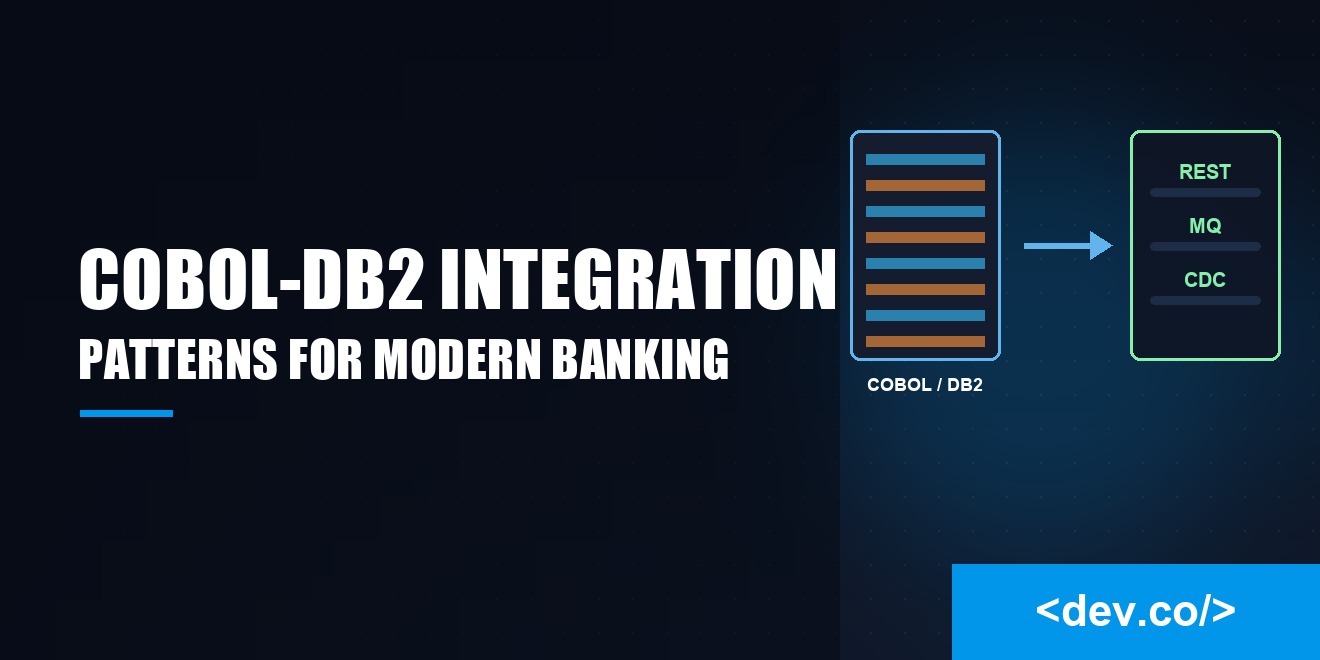
COBOL-DB2 Integration Patterns for Modern Banking Platforms
COBOL is not leaving the vault any time soon, and that is fine. Banks depend on proven mainframe logic, yet customers expect sleek digital channels. Bridging those worlds means connecting COBOL transactions with DB2 data flows in ways that are fast, safe, and maintainable.
In this guide, we map the terrain with practical patterns, call out the potholes, and explain how to steer. If you care about software development at bank scale, you are in the right place.
Why COBOL and DB2 Still Matter
An IBM mainframe running DB2 delivers reliability, throughput, and audit trails that are hard to beat. Core systems clear payments, calculate interest, and post ledger updates with clockwork consistency. Replacing that backbone risks outages and settlement errors. Integration preserves proven rules while opening doors to analytics, mobile channels, and cloud services.
Design Principles That Prevent Drift
Keep the critical path simple, minimize data copies, and treat latency as a budget, not a surprise. Centralize schemas with versioned contracts. Treat host programs and off platform services as peers that exchange clear messages. Test under peak loads and month end contours so the system does not wilt when it matters.
Direct Program Calls with Embedded SQL
The classic pattern has COBOL issuing embedded SQL against DB2, then returning results to a transaction monitor. You gain transactional purity because commits and rollbacks share one scope. You also inherit tight coupling. Callers must manage host variables, code pages, and batch windows. If you choose this route, isolate I/O routines, keep SQL readable, and prefer stable views over base tables.
Service Exposure Through CICS and APIs
Modern platforms prefer services. With CICS and z/OS Connect, COBOL logic can be exposed as REST or MQ endpoints. The outside world sees a stable API while the program continues to speak SQL to DB2. This reduces knowledge leakage about copybooks and struct layouts, and it lets teams evolve routing, auth, and rate limiting without touching business code.
Choosing Protocols That Fit the Load
REST is easy to adopt but chatty at high rates. MQ offers durable delivery and back pressure. gRPC over HTTP/2 brings binary efficiency and strong contracts. Pick per use case and document timeouts and retry rules so clients behave.
Managing Schemas And Versioning
Put every field in an API catalog with owners and examples. Prefer additive changes. Bundle change notices with test stubs so client teams can validate early and avoid last minute drama.
Change Data Capture as a Synchronization Backbone
When the goal is to mirror DB2 changes off platform in near real time, log based CDC shines. Tools read transaction logs and publish inserts, updates, and deletes to a queue. Downstream consumers update search indexes, materialize views, and train models without loading the host.
Guaranteeing Order and Idempotency
Publish keys that let consumers detect duplicates. Partition streams by entity so updates apply in sequence. Store offsets and last applied versions to make replays safe.
Protecting Data Quality
Track lag, drop rates, and schema drift. If a job falls behind, backpressure should alert rather than hide gaps. When a field goes null unexpectedly, quarantine the record and investigate.
Virtualization and on Demand Views
Sometimes the cheapest integration is to avoid copying. Data virtualization builds logical views that join DB2 tables with off platform datasets. Applications query a single schema and the platform routes parts of the query to each source. Cross source joins require careful filters so you do not ship mountains of rows across the wire.
Batch Bridges for Heavy Lifting
End of day extracts still feed risk, statements, and regulatory reports. A reliable approach exports DB2 tables to flat files or unload formats that preserve packed decimals, then stages them in a secure landing zone. Make file layouts versioned and self describing, with headers that include schema hash, extract time, and record counts.
Hardened SQL That Ages Well
Favor clear predicates and indexed access paths. Use small projection lists, not select star. Avoid functions on indexed columns and filter early. For heavy reads, snapshot with materialized query tables so writes keep moving. After statistics refreshes, confirm access paths. If a plan flip hurts latency, pin a known good plan while you investigate.
Security From Host to Cloud
Security must be consistent end to end. Constrain program execution with Resource Access Control Facility (RACF) or equivalent. Offload authentication to gateways and pass only scoped tokens inward. Encrypt in motion and at rest, mask nonproduction data, and rotate secrets. Least privilege belongs in code reviews, not just policy binders.
Observability That Matches Reality
Emit structured events per transaction and include resource usage. Align timestamps at ingestion so time zones do not confuse analysts. Dashboards should trace each request from API edge through the CICS region into DB2 buffer pools. Alert on customer facing symptoms first and track both median and tail latency by operation.
Performance and Contention Pitfalls
Normalize hot rows so a single account update does not lock a wide profile. Prefer optimistic control with retries for read heavy endpoints. Use multi row fetch and parameter arrays to reduce call overhead. Watch for false sharing in buffer pools and for scans without selective filters. If lock waits persist, revisit transaction scope and trim unrelated work.
Testing Strategies That Earn Trust
Build thin simulators for upstream and downstream partners so you can replay traffic safely. Generate test data with real value distributions and stubborn edge cases like zero interest periods and leap days. Assert on outcomes and resource budgets. A correct answer that burns twice the CPU is a hidden regression. Automate plan binds, dataset allocation, and cleanup so running tests is a habit, not a saga.
Migration Tactics That Respect Risk
Modernization rarely benefits from a big bang rewrite. Wrap stable COBOL functions with APIs and send new channels to those endpoints. Move read only use cases off platform using CDC driven replicas while updates remain on the host. Replace one cluster at a time, keep a dual run with reconciliations, and flip traffic only after equivalence is proven.
Governance and Schema Evolution
Schemas are contracts. Version payloads, avoid breaking changes, and publish deprecation timelines. When fields must change type, add siblings and migrate consumers gradually. Register topics, tables, and APIs in a catalog with owners and data classifications so discovery is not a scavenger hunt.
Costs, Capacity, and The Art of Enough
Mainframe MIPS are not cheap, and cloud bills grow quietly. Model workloads and set budgets at the pattern level. If an analytic feature needs a full table scan every few minutes, make the cost visible early. Throttle by tenant, cache read mostly content, and push heavyweight jobs to off peak windows. Track per request CPU on host and per call spend in the cloud so product owners can make sensible tradeoffs.
Team Topologies and Ownership
Integration works best when ownership is crystal clear. Assign one team to each boundary that touches COBOL or DB2 and make it the front door for fair change. Keep run books current, rotate on call, and publish SLOs tied to customer impact. After incidents, ask how to shrink blast radius. Clarity turns complexity steady.
Conclusion
COBOL with DB2 remains the steel core of many banks, and it rewards careful integration. Direct SQL calls maintain tight transactional control, service exposure unlocks agility at the edge, CDC moves data where it can be used without hammering the host, and virtualization avoids copies when possible. Strong SQL hygiene, consistent security, and credible observability keep everything honest.
Good testing habits reveal risk before it bites. Progress comes fastest when ownership is clear and migration steps are small, measured, and reversible. Do these things with discipline and you get the best of both worlds: mainframe certainty and modern experiences that feel quick, polished, and delightfully uneventful.