AI ERP with agents inside the systems you run
 AI phone and voice agents for real calls
 LLM.coPrivate, self-hosted LLM deployments
 Legal AI infrastructure for firms
 AI RFP discovery and response drafting
 Automatic.coBusiness process automation
 CyberAttack.aiThreat detection and defense
 Secure AI virtual data rooms
 DigitalSign.coAI-designed digital signage for any screen
 cstm.aiCustom AI hardware, software, and engineers
How to Implement Zero Trust Architecture in a Hybrid Cloud Environment
Most zero trust write-ups stay at the pillar level. Identity, device, network, workload, data, visibility, automation. Diagram, done. That is useful for a board slide and useless the Monday morning you have to retrofit mTLS across a cluster that still runs a 2017 WAR file behind a hardware load balancer.
This piece walks through the sequence a delivery team actually follows to put zero trust architecture into a mixed AWS, Azure, and on-prem estate without taking production down. The order matters more than the vendor logos. Pick the wrong first move and you spend six months arguing about Okta versus Entra while the lateral movement path you were worried about is still wide open.
Start With the Threat Model, Not the Pillar Chart
Zero trust is a response to a specific failure mode: a credential or workload inside your perimeter is treated as trustworthy by everything else inside the perimeter. The federal strategy that pushed this into the mainstream is explicit about it. OMB Memorandum M-22-09, issued January 26, 2022, required federal civilian agencies to meet specific zero trust goals by the end of FY2024. That memo is worth reading even if you are not federal, because it names the controls auditors now expect.
The dollars tell the same story. IBM's 2025 Cost of a Data Breach Report found 30% of breaches involved data distributed across multiple environments, at an average of $5.05 million per incident. Hybrid is where the money bleeds. And 22% of 2025 breaches began with credential abuse, which is exactly what a workload identity layer is meant to blunt.
Before any tool selection, write down three things: which workloads talk to which, which of those paths cross a trust boundary (cloud to on-prem, tenant to tenant, prod to prod), and which of those paths today authenticate with a long-lived shared secret. That list is the actual backlog. Everything below is in service of shrinking it.
Pick One Identity Broker and Mean It
Human identity has to consolidate before workload identity has a chance. In most hybrid estates the realistic choice is Okta or Microsoft Entra ID. The decision usually comes down to where your directory already lives and what your SaaS stack looks like.
- Entra ID wins when the estate is M365-heavy, Windows-dominant, and already has Conditional Access policies that work. Entra also federates cleanly into Azure workload identity, which matters if Azure is your primary cloud.
- Okta wins when the SaaS catalog is sprawling, when you need cleaner lifecycle automation across hundreds of apps, and when you want the IdP to stay neutral across AWS, Azure, and GCP.
The anti-pattern is running both as peers. Pick one as the authoritative source for humans and treat the other, if it exists, as a downstream consumer. Dual IdPs produce drift in group membership, which produces drift in authorization, which produces the kind of silent over-permission that IBM linked to 97% of AI-related breaches in 2025.
Give Workloads Their Own Identity With SPIFFE and SPIRE
Human SSO solves roughly half the problem. The other half is that your payments service still authenticates to your fraud service with a bearer token that was minted in 2022 and lives in a Kubernetes secret. That is the pattern SPIFFE SPIRE is designed to replace.
SPIFFE defines the identity format (spiffe://trust-domain/path). SPIRE is the runtime that attests workloads and issues short-lived SVIDs. The attestation is the interesting part: SPIRE verifies a workload against operating system facts (Kubernetes pod metadata, AWS instance identity documents, Azure VM identity, container image hash) before handing it a certificate, which means there is no bootstrap secret to leak. Certificates default to one-hour TTLs, so a compromised pod stops being useful within an hour of its SVID expiring.
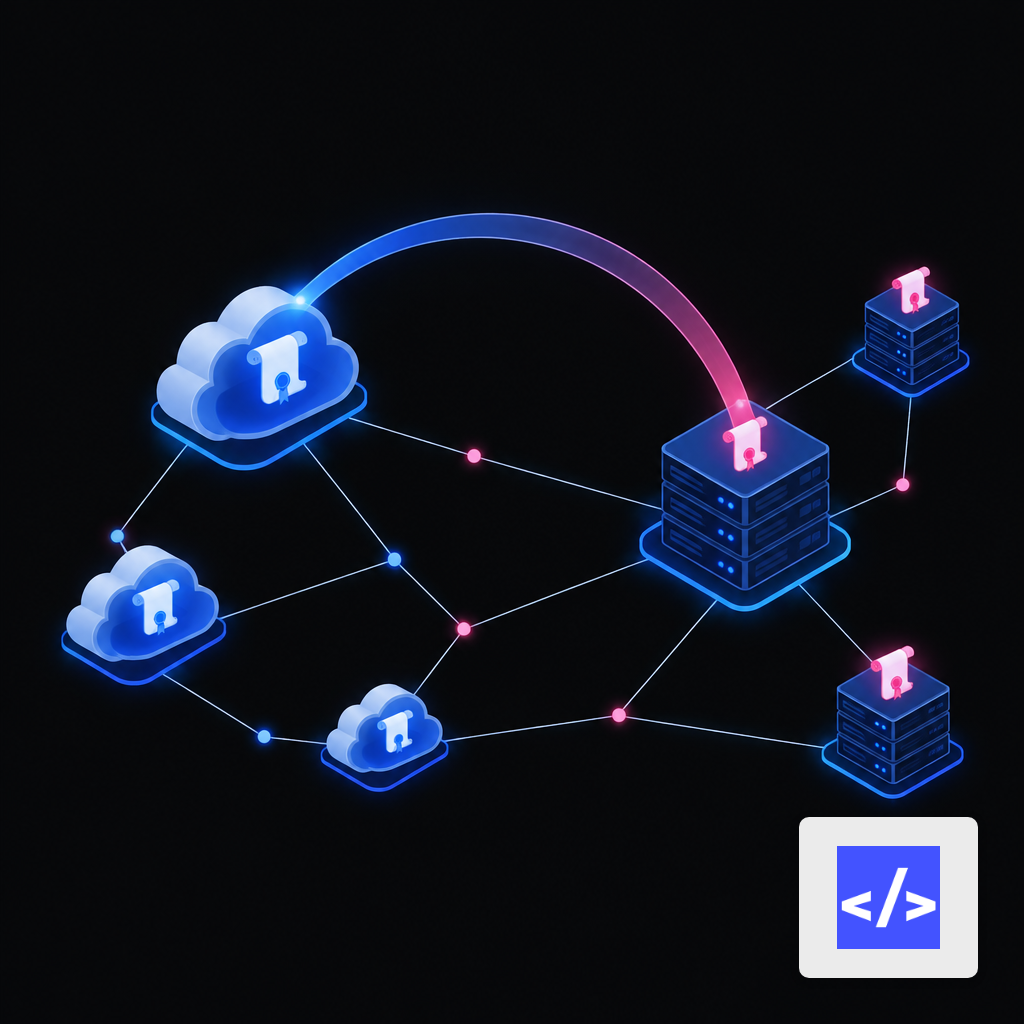
The federation story is why this matters for hybrid. A workload running on an EC2 instance in aws.prod.example.com can present an SVID that an Azure Function in azure.prod.example.com will accept, because the two SPIRE trust domains have exchanged trust bundles. You get one identity model across clouds instead of per-cloud federation chains, which is the core reason Red Hat and others ship SPIRE as a workload identity manager.
Deploy SPIRE in shadow mode first. Issue SVIDs to a handful of non-critical services, verify attestation is matching the selectors you expect, and only then start enforcing. The teams that get in trouble flip enforcement on globally and then spend a weekend chasing attestation misses.
Choose a Service Mesh That Matches Your Operational Budget
Workload identity is the identity layer. A service mesh is what enforces mTLS on the wire and gives you a place to write authorization policy. For most hybrid rollouts the choice is Istio or Linkerd, and the honest tradeoff is operational surface area.
- Istio uses an Envoy data plane, supports WASM filters, ambient mode, JWT validation, and L7 AuthorizationPolicy. Proxy memory sits around 50 to 100 MB per pod. It integrates cleanly with SPIFFE SPIRE and is the right call when you need advanced L7 routing or multi-cluster federation across more than a couple of clusters.
- Linkerd uses a Rust proxy that runs around 10 MB per pod and auto-enables mTLS on every TCP connection, with 24-hour certificate rotation out of the box. It does not do JWT auth or WASM. For a two-to-five person platform team, this is usually the correct answer.
If you already run Istio for routing, keep it. If you are starting cold and your policy needs are reasonable, Linkerd gets you to encrypted east-west traffic in an afternoon rather than a quarter. Either way, the mesh terminates mTLS using SPIFFE identities, which keeps the identity layer and the transport layer decoupled.
Microsegment East-West, Not Just North-South
Perimeter firewalls still matter, but the breaches that hurt happen after an attacker is already inside. Microsegmentation is how you shrink the blast radius. On Kubernetes, that is NetworkPolicy or Cilium policies plus mesh-level AuthorizationPolicy. On VMs, it is cloud-native security groups plus host-based agents. On-prem, it is often Illumio, Guardicore, or Cisco Secure Workload.
The target state is a default-deny posture where every allowed flow is explicit and tied to a workload identity rather than an IP. Gartner expects this to go multi-modal: by 2027, 25% of enterprises pursuing zero trust will use more than one microsegmentation deployment form, up from under 5% in 2025. That matches what hybrid estates actually look like. One tool rarely covers Kubernetes, legacy VMs, and bare metal on-prem equally well.
Sequence the rollout by trust boundary, not by data center. Start with the paths that cross a boundary (prod-to-prod in different clouds, DMZ into internal, anything touching PCI or PHI) and close those with explicit allow rules. Internal lateral paths come second.
Write Policy as Code With OPA or Cedar
Authorization logic sprinkled across application code is the single biggest reason zero trust initiatives stall. You cannot audit it, you cannot change it without a release, and the people writing it are not the people responsible for the policy. Policy-as-code engines fix this by externalizing the decision.
Open Policy Agent is the default choice. Policies are written in Rego, services call OPA at decision time, and the policy bundle is versioned in Git the same way application code is. AWS Cedar is the newer alternative with a simpler policy language and native integration into Verified Permissions. For teams that want something closer to the shape of IAM, Cedar is often easier to onboard. For teams that already run OPA in admission control, extending it to runtime authorization is the shorter path.
The piece most teams skip is decision logging. Every policy decision should emit a structured log with the principal, the resource, the action, and the policy version. Without those logs, you cannot answer the question auditors will ask: on March 14 at 02:17, who was allowed to read what, and why.
Roll It Out as a Strangler-Fig, Not a Big Bang
The last decision is sequencing, and this is where delivery teams earn their keep. A zero trust implementation that tries to flip the whole estate at once breaks production and gets rolled back. The strangler-fig pattern that works for monolith decomposition works here too: new flows go through the new controls, old flows are migrated one at a time, and the legacy path is removed only after telemetry says nothing is using it.
A workable order for a hybrid estate looks like:
- Consolidate human identity on one IdP and get SSO plus MFA across the top 20 apps.
- Stand up SPIRE in shadow mode in one cloud, issue SVIDs to one service, verify attestation.
- Install the mesh in one namespace in permissive mode, confirm mTLS is handshaking against SPIFFE IDs.
- Switch that namespace to strict mTLS and default-deny AuthorizationPolicy.
- Federate SPIRE trust domains across clouds and repeat steps 3 and 4 in the second environment.
- Externalize authorization for one critical service to OPA or Cedar, with decision logging.
- Microsegment the cross-boundary paths you identified in the threat model.
- Expand coverage service by service, retiring long-lived credentials as you go.
Each step is reversible. Each step produces a measurable change in attack surface. That matters because leadership will ask what they got for the quarter's spend, and "we moved 14 services to short-lived identities and closed 9 lateral paths" is a better answer than "we are 40% through the zero trust program."
What to Hand a Partner Before the SOW
If you are evaluating a US software partner to lead or augment this work, the artifacts worth preparing are the same ones that make the project succeed: a current-state inventory of services and their trust boundaries, the IdP decision (or the criteria to make it), a list of long-lived credentials ranked by blast radius, and a target state for workload identity. A good partner will push back on sequencing and ask hard questions about which services genuinely need L7 policy versus which just need mTLS. That is the conversation worth having before scope is signed, and it is the kind of engagement DEV.co structures around legacy modernization and secure multi-tenant architecture work.
Zero trust is not a product. It is a sequence of specific control changes, applied in an order that keeps production running. The teams that get it right treat it as a two-year architecture program with quarterly outcomes, not a tool purchase. For a deeper look at how we scope this kind of work, the About page covers the delivery model, and the RFP guide walks through what belongs in the scope document itself.